My approach
Good one-to-one tuition is not simply a private version of a classroom lesson.
It gives us the opportunity to slow down, notice more, ask better questions and shape the work around the student in front of me. The purpose is not only to get through material, but to understand how the student is thinking and help them become more confident, precise and independent.
Slow down
Notice more
Ask better questions
Shape the work
Attentive one-to-one teaching
A student’s difficulty with mathematics is not always obvious from the final answer.
Sometimes the issue is a missing foundation. Sometimes it is a misconception. Sometimes the student understands more than they think, but has lost confidence. Sometimes they can perform a method in a familiar setting but do not recognise when or why to use it.
In one-to-one tuition, I can pay close attention to these details.
I listen to how a student explains an idea, where they hesitate, which steps they rush, what they avoid and what they are beginning to understand. These details guide the lesson and help us work on the right thing, rather than simply moving through a list of topics.
“Those small signs matter.”
Understanding before imitation
Students often come to maths with methods they have been told to use but do not fully understand.
A method can be useful, but only if the student knows what it is doing, when it applies and why it works. Otherwise, mathematics becomes a memory test: a collection of procedures to imitate, with little confidence when a question looks different.
I help students build understanding beneath the method.
That might involve using a simpler example, drawing a diagram, changing the wording, comparing two similar questions, asking the student to explain a step, or exploring why a tempting approach does not work.
The focus is for students to become less dependent on recognition and more able to think.
What is it doing?
When does it apply?
Why does it work?
Questions chosen with purpose
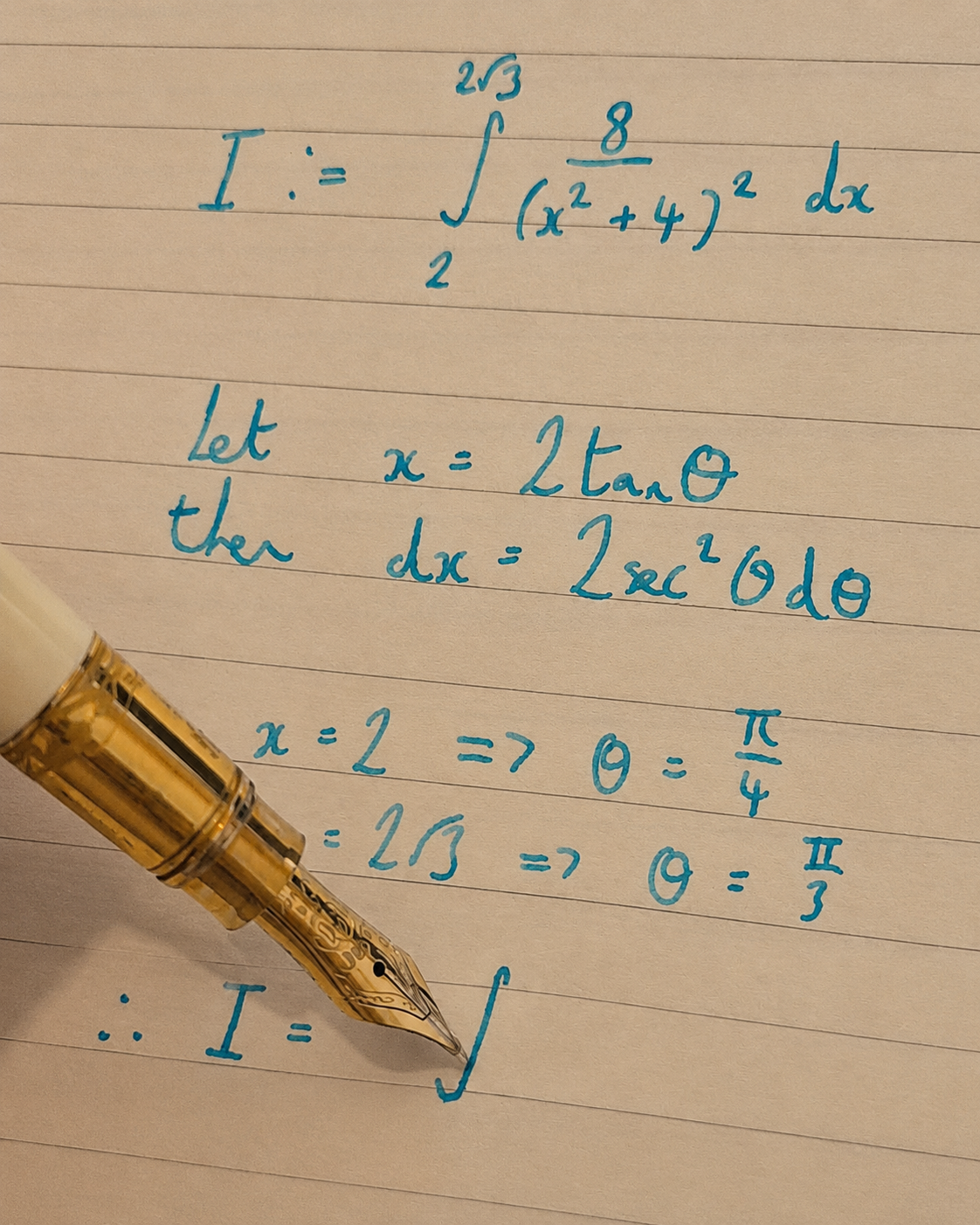
Over many years of tutoring, I have built a large collection of questions, examples and exercises across secondary mathematics.
I choose work not simply by topic, but by the precise idea, misconception or skill that needs attention. Sometimes a question needs to be stripped back so the student can focus on the core concept without unnecessary distraction. At other times, complexity needs to be added back in: unfamiliar wording, additional steps, distracting features or connections between topics.
I also generate exam-standard questions during sessions, adjusting structure and demand to test a particular area of understanding.
The aim is not simply to do more questions, but to choose the right questions at the right time.
Mistakes as part of the work
Mistakes are often where the most useful learning begins.
A wrong answer can show us what the student assumed, which step was insecure, where a definition was unclear or why a method was being used without understanding. I want students to feel safe enough to try, but guided carefully enough to improve.
That does not mean being casual about accuracy. Mathematics rewards precision. But students are more likely to become precise when mistakes can be examined calmly rather than treated as evidence of failure.
“Mistakes are not interruptions to learning.”
Guided discovery, not passive listening
I do explain. Clear explanation matters.
But a lesson should not consist only of the student watching me perform mathematics. Students need to think, try, speak, write, question, make decisions and test ideas for themselves.
Where possible, I guide students towards conclusions rather than simply handing them answers. The amount of guidance depends on the student and the moment. Sometimes they need a careful explanation. Sometimes they need a hint. Sometimes they need time to wrestle with an idea and discover that they are capable of more than they first thought.
Think
Try
Speak
Write
Question
Test ideas
Writing to the future self
Good written work is more than a way to satisfy an examiner.
A good solution should explain what the student was thinking clearly enough that they can return to it later and understand the reasoning again.
I help students develop written mathematical communication: setting work out clearly, using notation accurately, explaining steps, avoiding hidden leaps and making their reasoning easier to follow.
This is valuable for exams, but it is also part of becoming a stronger mathematician.
“A solution is a message to the student’s future self.”
Confidence with rigour
Confidence matters, but confidence cannot simply be declared into existence.
Students become more confident when they understand more, practise well, communicate more clearly and experience themselves making genuine progress. That confidence is strongest when it is built alongside rigour.
I want students to feel encouraged, but not flattered into complacency. I want them to feel safe enough to try, but challenged enough to improve.
Encouraged
Challenged
Precise
Secure
Examination preparation
Exam technique is important, especially at GCSE and in post-GCSE mathematics.
I help students use past papers carefully, recognise common structures, understand how marks are awarded and improve the clarity of their written solutions. Mark schemes can clarify what examiners are looking for, but students should not become dependent on memorised phrasing. The aim is to help them present valid mathematical reasoning clearly and receive the credit it deserves.
The best exam preparation combines understanding, practice and tactical awareness.
“Mark schemes are guides, not scripts.”
A collaborative relationship
Good tuition depends on trust.
Students need to feel able to ask questions, admit confusion, try ideas and say when something does not make sense. Parents need to feel that the work is thoughtful, purposeful and responsive to the student’s needs.
I work best with families who value sustained progress and students who are willing to participate actively in the process.
Trust
Questions
Participation
Progress
The wider aim
I want students to do well.
But I also want them to leave tuition with something more durable than a set of remembered procedures. Over time, students should feel more able to think mathematically, more willing to engage with difficulty and more confident that mathematics is something they can understand and use.
Think mathematically
Engage with difficulty
Understand
Use
Begin with a conversation
If you would like to discuss tuition, please get in touch with a few details about the student, their course or year group, and the kind of support you are looking for.
I will reply by email as soon as I can.